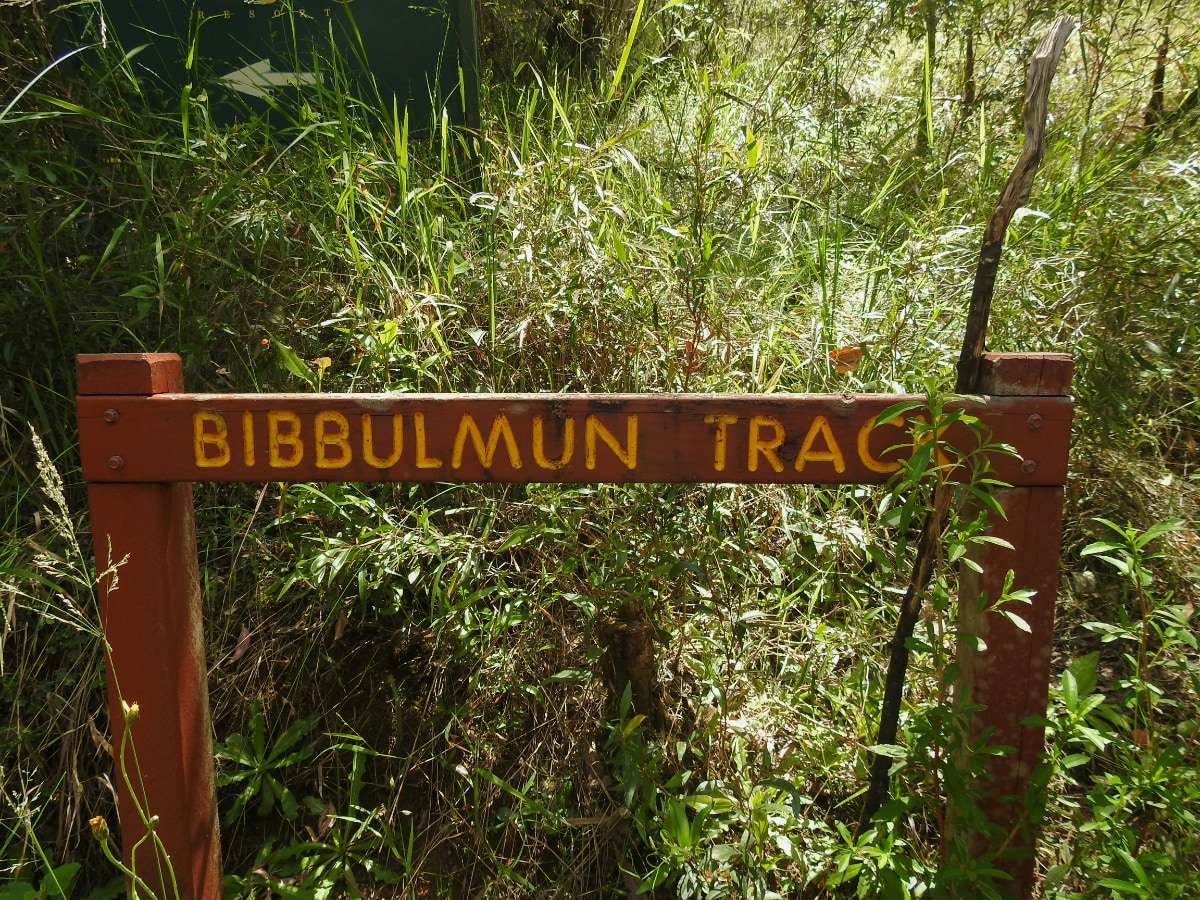
A purpose-built field system for the Bibbulmun Track Foundation — letting volunteers log hours, conduct structured campsite and track audits with photos, and giving the Foundation the reporting data they need to manage 1,000km of trail.
The Bibbulmun Track is one of the world's great long-distance walking trails — 1,003 kilometres from Kalamunda on Perth's eastern fringe to Albany on the south coast, passing through some of Western Australia's most spectacular jarrah forest and karri country. Maintaining it is a year-round operation that depends almost entirely on volunteers.
Those volunteers do real, physical work: clearing fallen trees after storms, repainting trail markers, inspecting the 53 campsites, checking water tanks and pit toilets, fixing drainage, and reporting hazards. Their observations are the Foundation's primary intelligence about what's happening across the track at any given time.
But capturing that intelligence had been a persistent problem. Volunteers were logging hours and recording inspections on paper forms, spreadsheets, and emails — each section group had developed its own approach. The Foundation's small staff were spending significant time each month chasing timesheets, manually reconciling data, and trying to build a picture of track condition from fragmented reports.
The brief was to replace all of that with a single system: one place where volunteers could log their time, conduct structured audits of campsites and track sections, attach photos from the field, and submit everything in a format the Foundation could actually report from.
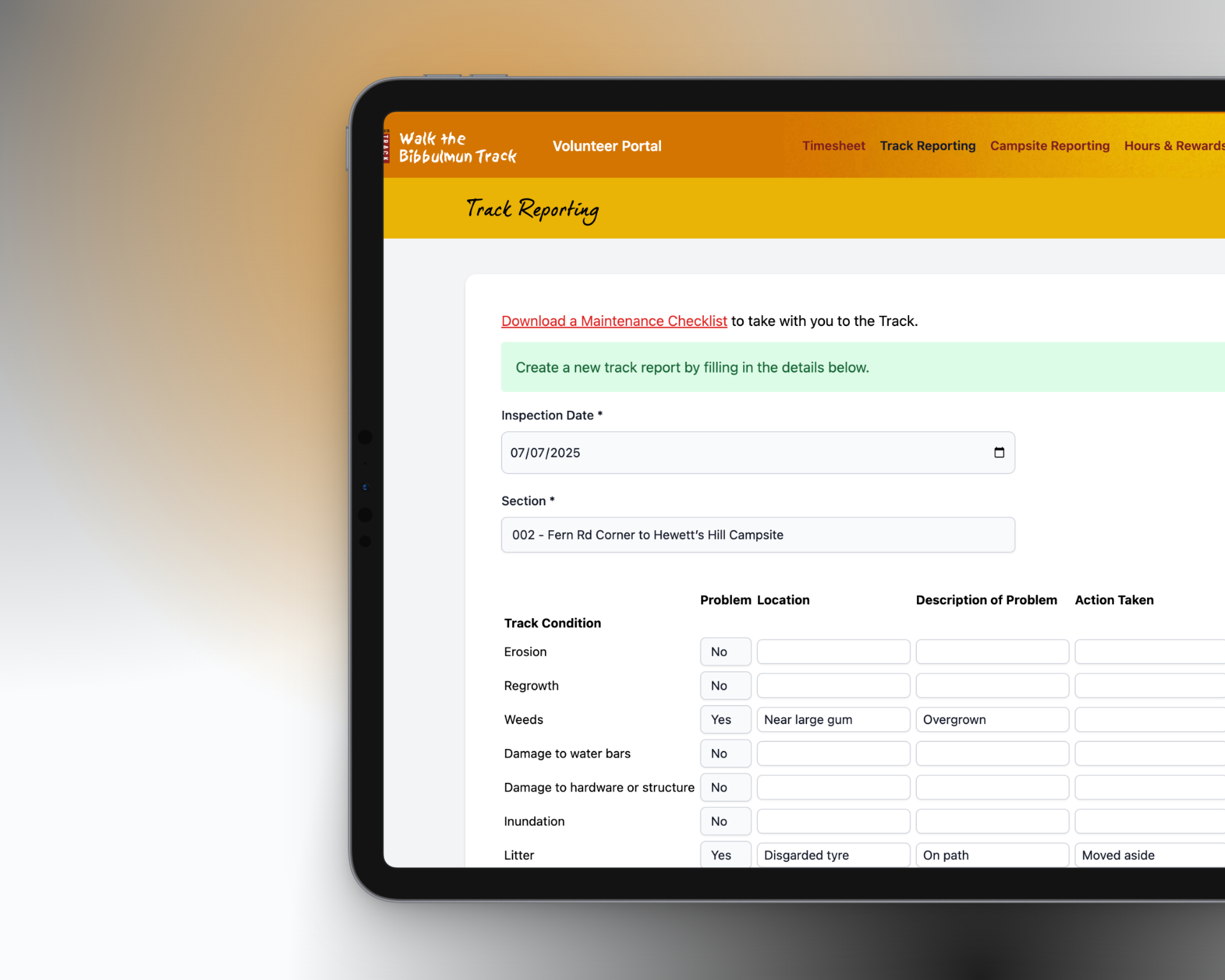
The system has three main modes. Timesheets are quick to complete — volunteers pick the activity type, enter their hours, and optionally add a note. Campsite audits are structured forms covering each element of a site: the shelter, toilet, water tank, tent sites, tables, fireplace, and signage, each rated on a simple condition scale. Track audits work similarly, tied to sections of the track rather than individual sites. Both audit types support photo attachments taken directly from the phone's camera.
On the administration side, Foundation staff have a dashboard that surfaces what matters: recent activity, outstanding issues flagged in audits, volunteers who haven't submitted timesheets, and campsites overdue for inspection. Reporting can be filtered by volunteer, section, time period, or issue type and exported for grant acquittals, departmental reporting, and board updates.
Before the system, the Foundation's picture of track condition was always incomplete and always delayed. Now, when a volunteer submits an audit after a weekend patrol, the record — with photos — is immediately visible to staff and section coordinators. Issues flagged as urgent go straight to the right person.
The timesheet data changed the conversation with funders. Where previously the Foundation was estimating volunteer contribution from partial records, they can now report precise hours by activity type across any period. That data underpins grant applications and demonstrates the program's scale in a way paper spreadsheets never could.
For volunteers, the system removed friction rather than adding it. The user interface is fast and requires no training. Several section groups that had resisted previous attempts to standardise their recording adopted the new system within weeks, because it was genuinely easier than what they'd been doing before.
Book a free discovery session and get
a fixed-price quote within 3 business days.